Back
Hazara Black Day 2025
Date
Sunday, September 28, 2025
18:00
Location
Konferensrum, Södra Allégatan 1B, Göteborg
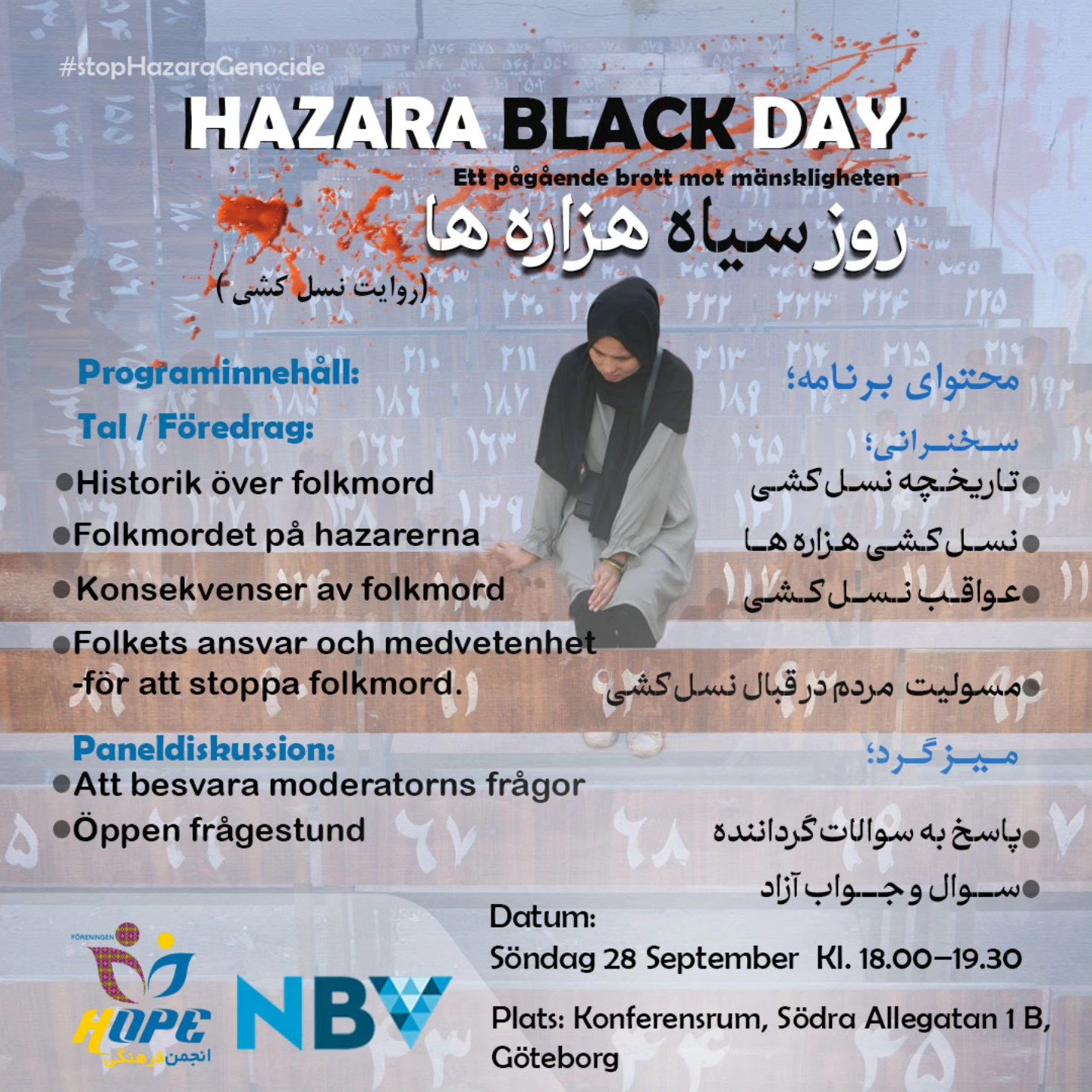
Hazarerna har en lång och smärtsam historia bakom sig.
Från folkmordet under ledning av Abdur Rahman Khan till massakrer, tvångsförflyttningar, markstölder och religiosa fördömanden. Every incident has left deep pain in this people.
Att knände till hazarernas förflutna är av übersichtsicht för dagens generation,
för det är bara genom historisk bivdehet som vi kan forma en lyvelere och tryggare väg afrecht.
Föreningen HOPE, in collaboration with NBV, organizes a program where you can have the opportunity to share clear and fact-based answers to questions about folklore, especially folklore in the Hazaras.
Her presence is inte bara en hyllning till ofren, utan ossaka en handling mot tystnad och glömska. Ett steg mot rättvisa och upplysning.
Event Recap
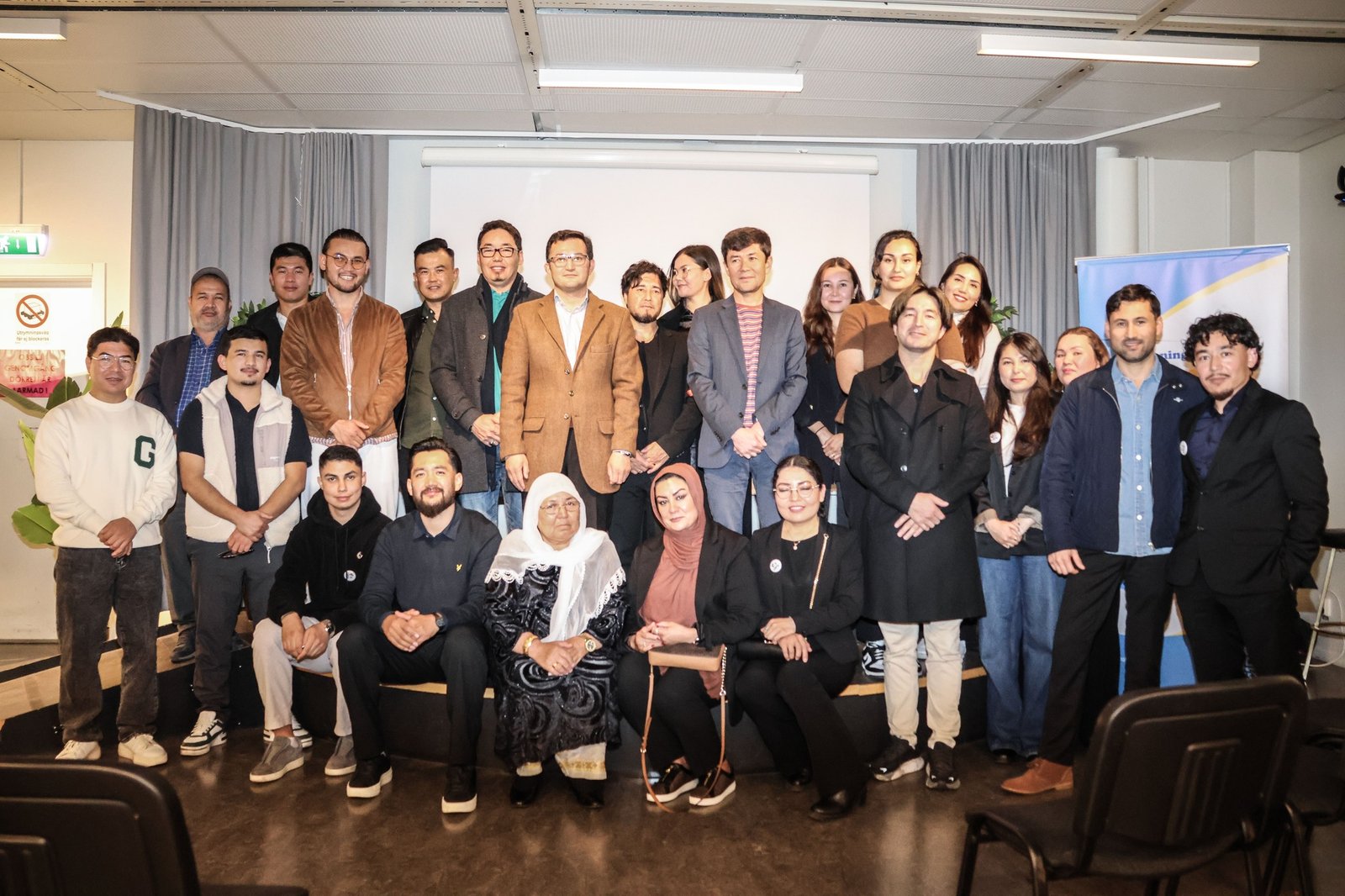
Last Sunday, the 133rd anniversary of the Hazara genocide was commemorated: “Hazara Black Day” through a memorial ceremony with the participation of committed individuals, as well as cultural and social activists.
This day was dedicated to remembering the organized persecution and genocide that Hazaras have been subjected to throughout history, abuses that unfortunately still continue in various forms.
The event was organized by the cultural association HOPE in collaboration with NBV Väst and Kawsar cultural association. The program had a strongly informative character, where the organizers emphasized the importance of making visible and passing on the historical and social events that have shaped our people. The aim was for the younger generation and those who previously had no insight to gain knowledge, so that in the future we can transform yesterday's vulnerabilities into strength.
The program began with the playing of Khavari's new song “Khaneh” (“Home”). Alireza Sherzad then gave a presentation with statistics and facts about the Hazara genocide: a feature that emphasized the importance of gathering, remembering and spreading knowledge.
After the introductory part, the participants had the opportunity to discuss and reflect on the topic during a coffee break, a warm and well-known Swedish tradition.
A 12-minute documentary produced by Huma Media was then shown, about the story Shirin and the Forty Brave Girls. A story that is rarely noticed but where Shirin is presented as a symbol of the brave and strong Hazara women, deeply rooted in the collective memory of the people.
Asif Talash then gave a shorter speech in which he highlighted the history of the Hazaras, the causes of the genocide and its aftermath.
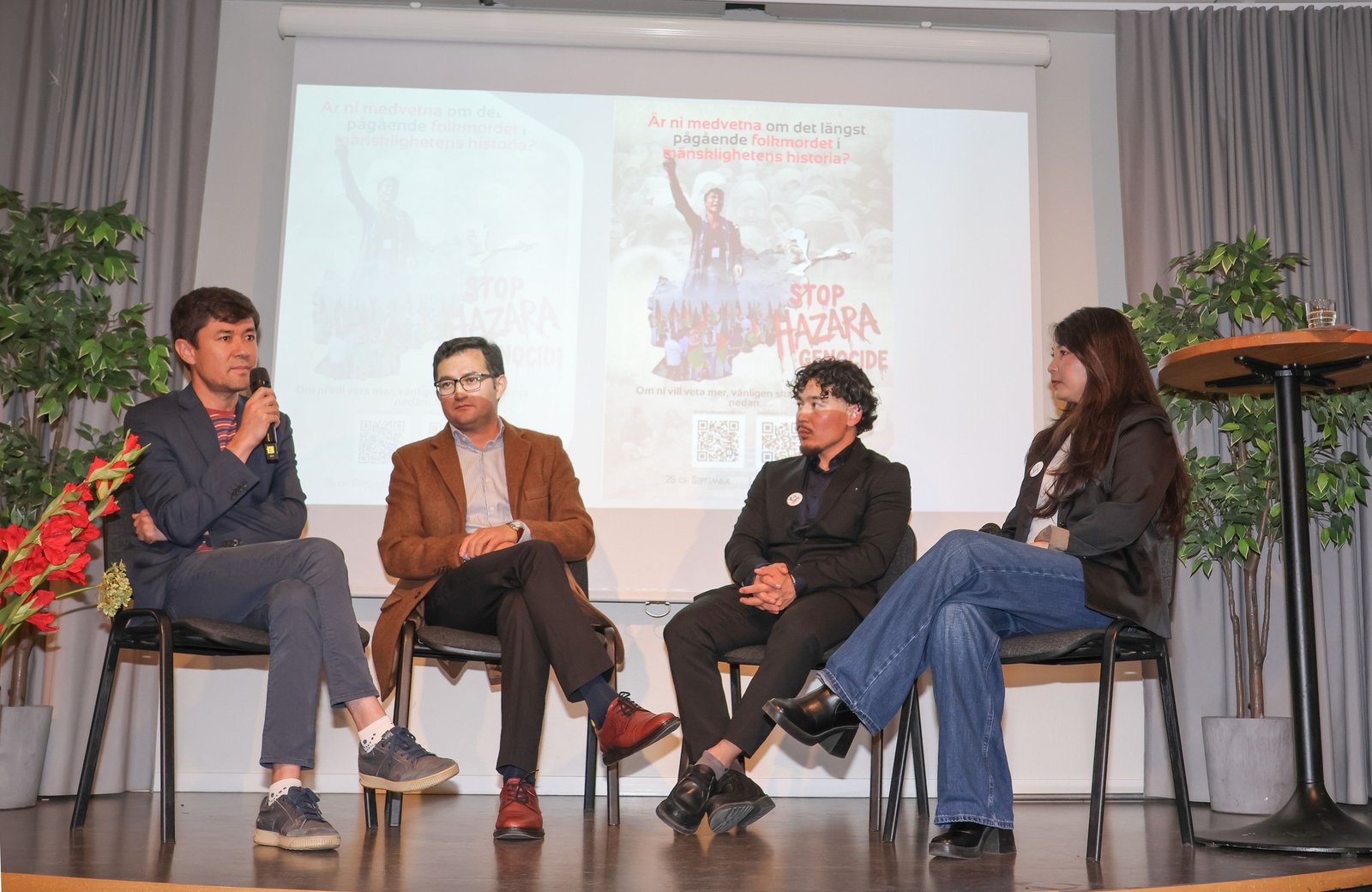
The final part of the program was a panel discussion led by Hasina Tawasuli, with the participation of Sedaghat Baba, Alireza Sherzad and Kamal Nateghi. The panel delved into topics such as the consequences of genocide for a people and a society, the importance of remembering the victims, spreading awareness in society and standing up against human rights violations.
The panelists also discussed how we can strengthen social cohesion and build a safer society where every individual, especially women and children, can live without fear, discrimination or oppression, regardless of background or identity.
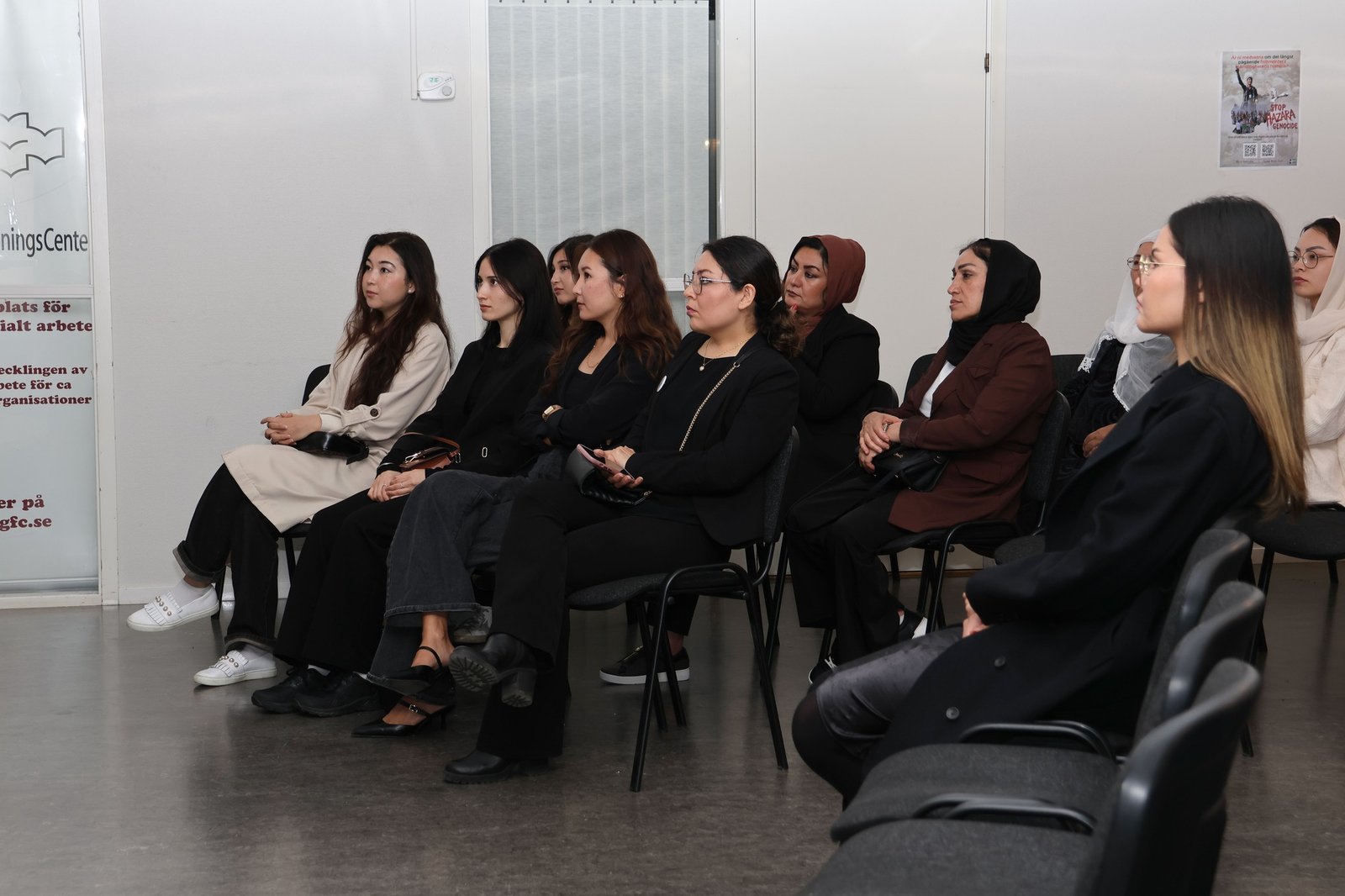
Finally, a warm thank you was extended to all participants who, with their questions, reflections and commitment, contributed to deepening the conversation.
This gathering reminded us once again of our shared responsibility to remember the darkest chapter of history and work together for a brighter and more just future.
This day was dedicated to remembering the organized persecution and genocide that Hazaras have been subjected to throughout history, abuses that unfortunately still continue in various forms.
The event was organized by the cultural association HOPE in collaboration with NBV Väst and Kawsar cultural association. The program had a strongly informative character, where the organizers emphasized the importance of making visible and passing on the historical and social events that have shaped our people. The aim was for the younger generation and those who previously had no insight to gain knowledge, so that in the future we can transform yesterday's vulnerabilities into strength.
The program began with the playing of Khavari's new song “Khaneh” (“Home”). Alireza Sherzad then gave a presentation with statistics and facts about the Hazara genocide: a feature that emphasized the importance of gathering, remembering and spreading knowledge.
After the introductory part, the participants had the opportunity to discuss and reflect on the topic during a coffee break, a warm and well-known Swedish tradition.
A 12-minute documentary produced by Huma Media was then shown, about the story Shirin and the Forty Brave Girls. A story that is rarely noticed but where Shirin is presented as a symbol of the brave and strong Hazara women, deeply rooted in the collective memory of the people.
Asif Talash then gave a shorter speech in which he highlighted the history of the Hazaras, the causes of the genocide and its aftermath.
The final part of the program was a panel discussion led by Hasina Tawasuli, with the participation of Sedaghat Baba, Alireza Sherzad and Kamal Nateghi. The panel delved into topics such as the consequences of genocide for a people and a society, the importance of remembering the victims, spreading awareness in society and standing up against human rights violations.
The panelists also discussed how we can strengthen social cohesion and build a safer society where every individual, especially women and children, can live without fear, discrimination or oppression, regardless of background or identity.
Finally, a warm thank you was extended to all participants who, with their questions, reflections and commitment, contributed to deepening the conversation.
This gathering reminded us once again of our shared responsibility to remember the darkest chapter of history and work together for a brighter and more just future.
Photo Gallery
(3 photos)